Production & packaging scheduling for food and beverage

The schedule your plant can actually run.

Emerge Production Intelligence™ schedules every process line, packer and crew to the minute. Changeovers, allergen order, sanitation windows and shared packers are part of the plan from the first run, not patched in afterwards.

Take a line down
DEMO PLANT / LINE ROOM A / LINE SCHEDULE
Illustrative example data
Released
Line efficiency0
Changeover minutes0
Schedule adherence0
Cases planned0
Crew hours0

Swipe sideways to scroll the timeline

Interactive illustration. Plants, products, rates and KPIs are fictional example data, not results from any customer site.

Allergen sequencingChangeover matrixSanitation & CIP windowsProcess-to-packer ratiosShared packersCrews by shiftMaintenance windowsRun rates by SKUPack size & film changesDemand & on-hand inventoryFeasibility checks

Inside the scheduler

Real screens. A snack plant and a beverage plant.

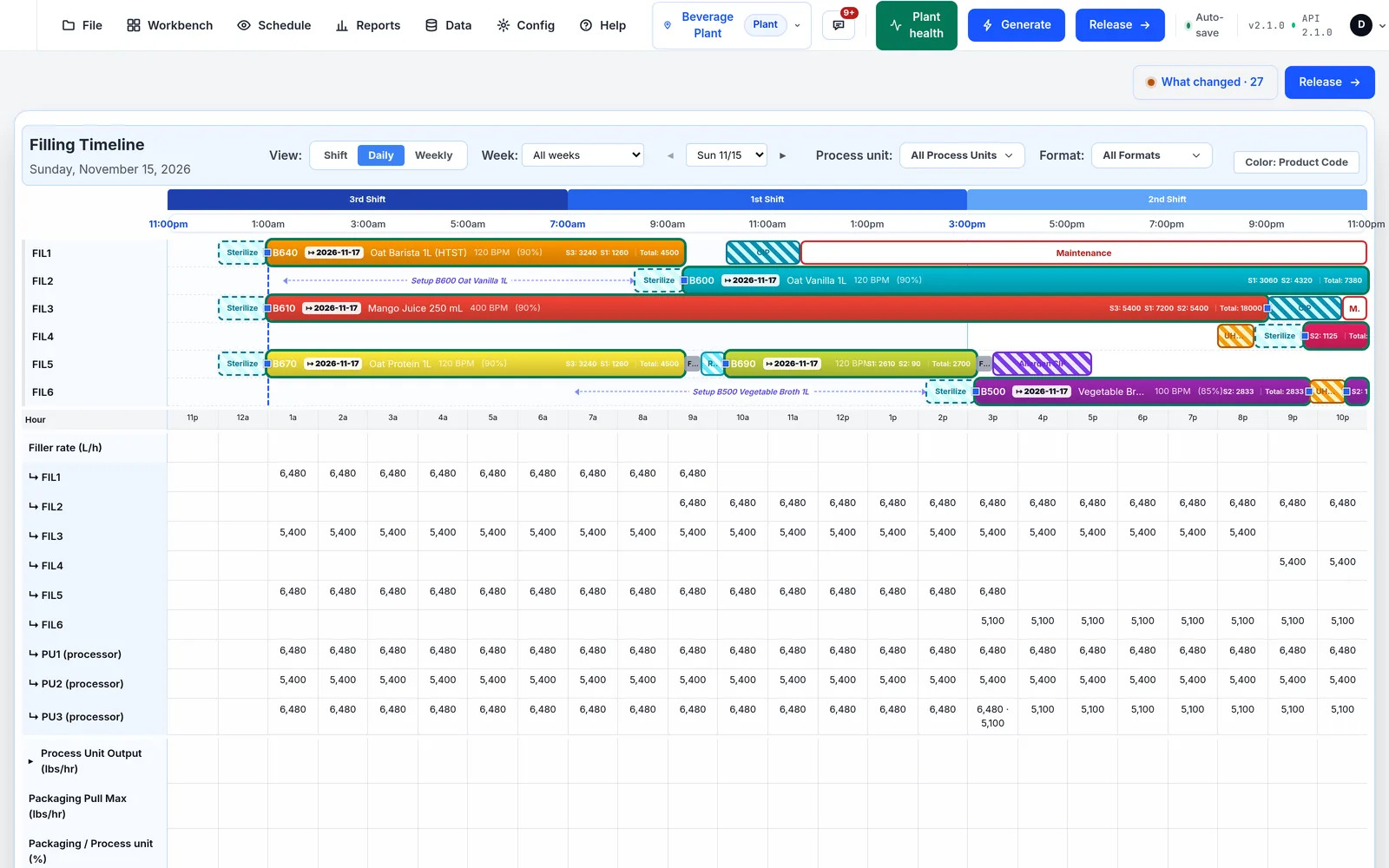
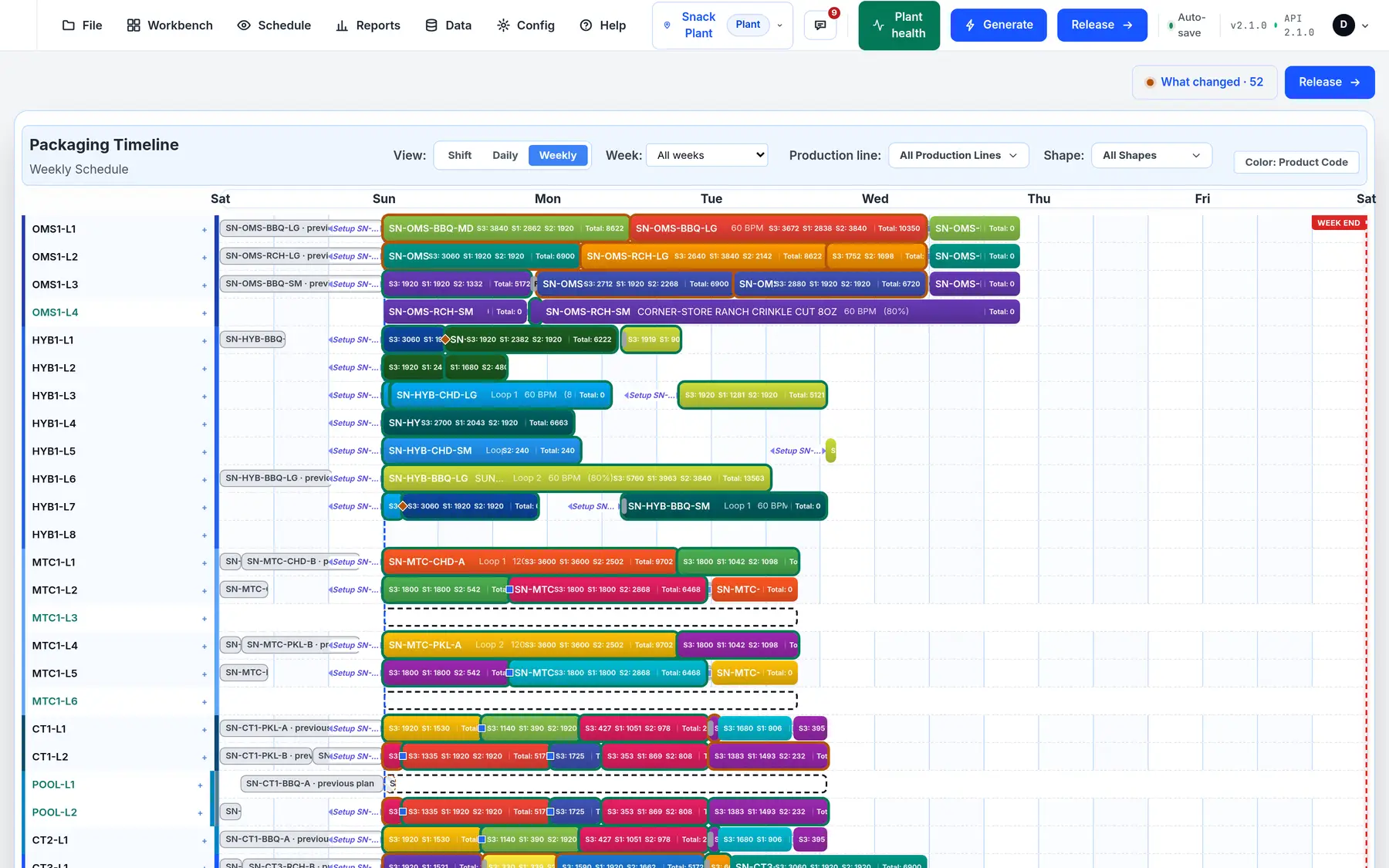
Captured from the Emerge PI scheduler running two fictional demo plants. Nothing is mocked up or retouched. Product names, lines and figures are demo data, not customer data.

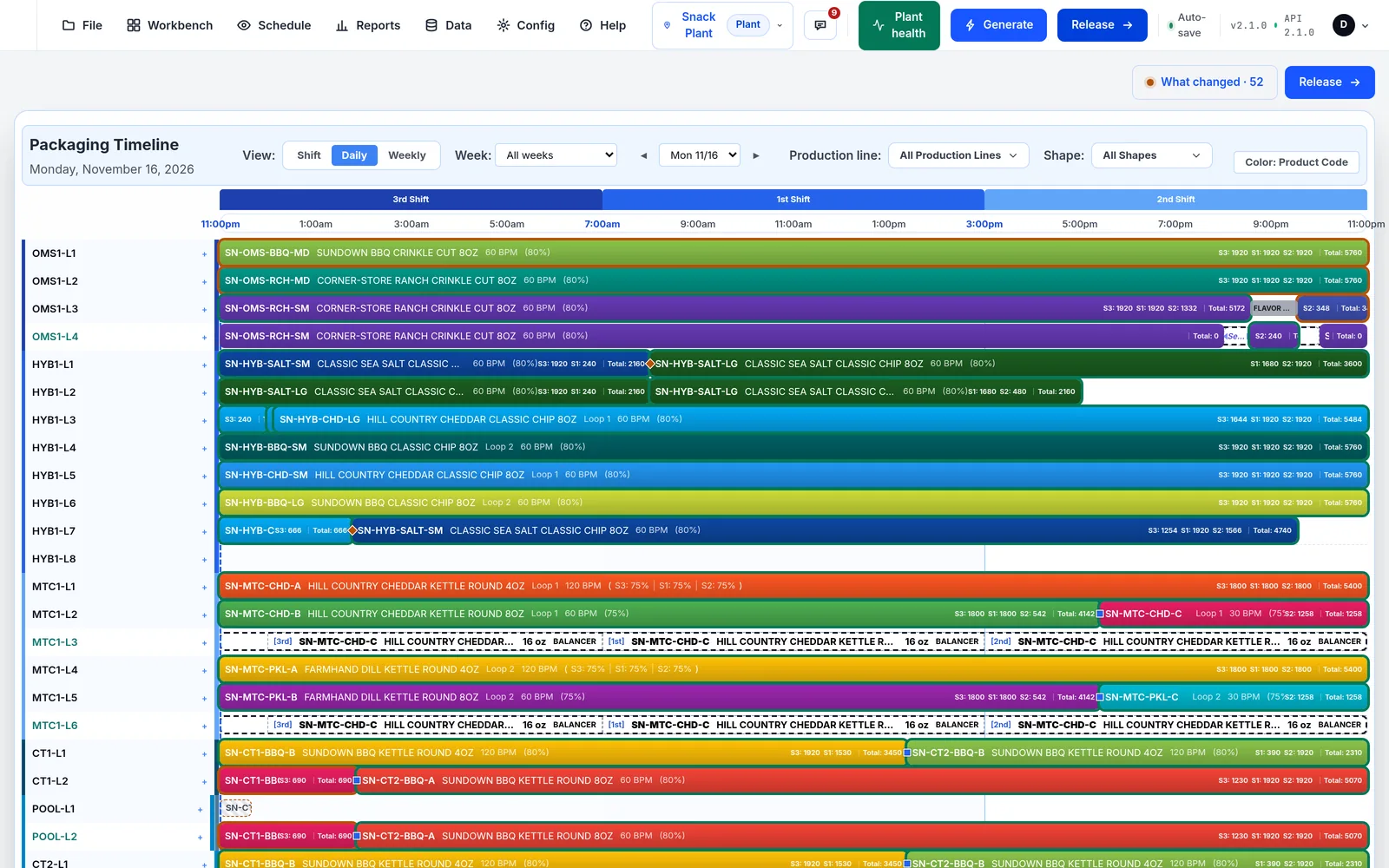
Emerge PI scheduler screen: Line schedule
Line scheduleDaily packaging timeline: every packer line, every run, with bag speed and cases by shift.

Why it matters

Food plants rarely run short of capacity. They lose it in the sequence.

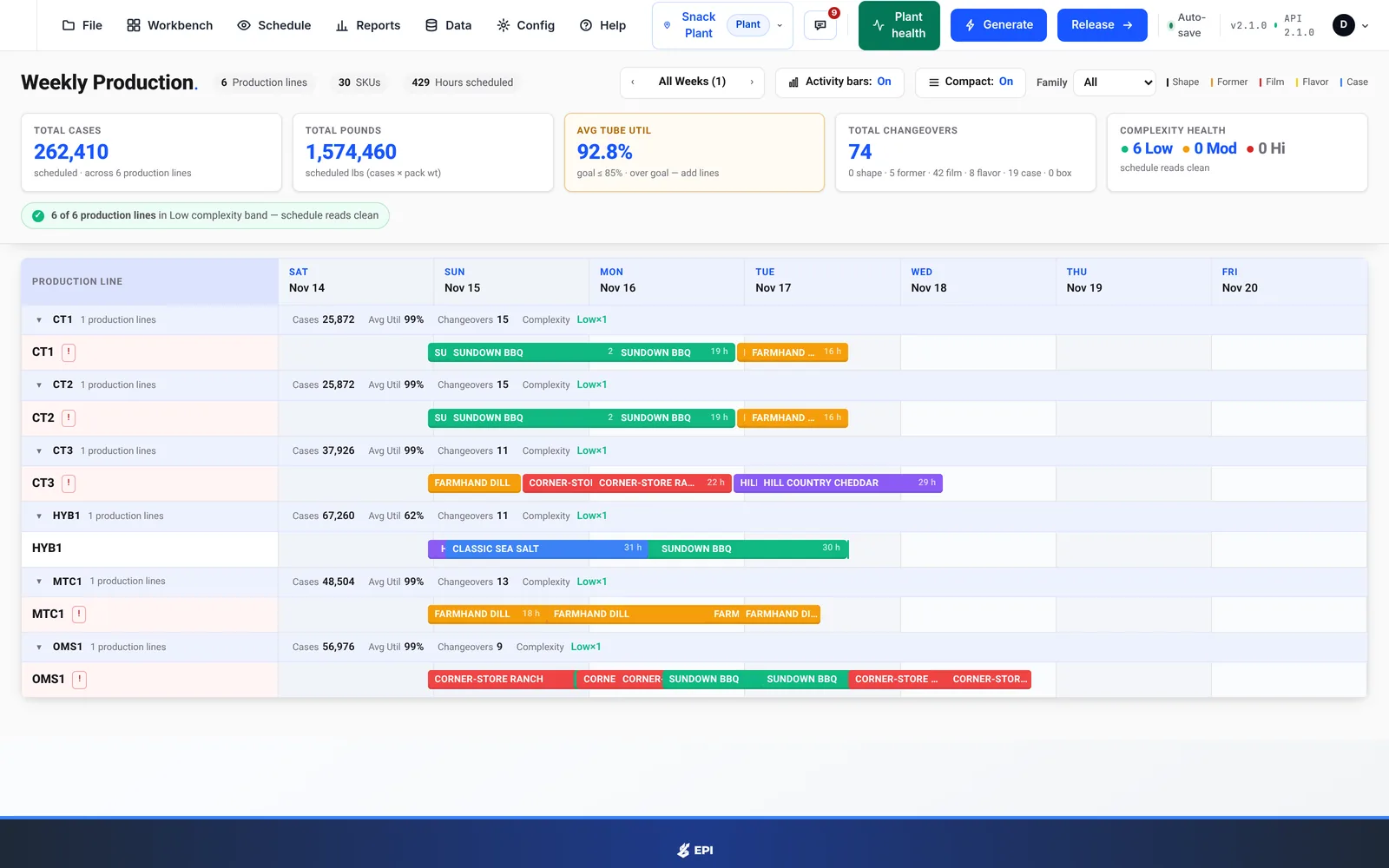
Emerge PI weekly production view for a demo snack plant, showing cases and changeovers by line
01

Changeovers stack up

Flavor flushes, film changes and size changes cost minutes every time. A poor sequence can cost a whole shift.

02

Allergens set the order

Run in the wrong order and a quick changeover becomes a full washdown.

03

Sanitation is fixed

CIP and sanitation windows don't move. The schedule has to bend around them.

04

Crews are the constraint

A line with no crew is a line that's down, and every plan has to fit the staff on hand for each shift.

05

Short shelf life

Fresh product can't wait in a warehouse to cover for a bad plan.

06

Demand moves daily

Promotions, rush orders and a packer that goes down at 10:30. The plan has to keep up.

What's inside

Built for the physics of a food plant, not a generic job shop.

Process-to-packer flow

Process lines, seasoning and packers are scheduled together, with ratios and shared packer rooms built in.

Allergen sequencing

Import an allergen matrix and the order of runs respects it, so a washdown happens when it has to and not before.

Changeovers & CIP

Typed changeovers, from label and coder changes and flavor flushes to size or format changes, allergen washdowns and full CIP.

Crewing by shift

Labor groups turn the plan into a day-by-shift staffing matrix: hours required, hours earned and the crew on each line.

Feasibility gates

Preflight checks flag configuration conflicts and size-stream shortfalls before you generate.

Cycle planning

Lock an N-week production cycle, see coverage by SKU and release the work week to execution.

Plan vs. actual

A released-plan Gantt with MES actuals overlaid, a moving now-line, adherence by SKU and shift detail.

Reports your meeting needs

Packaging performance, production versus plan with on-time-in-full, demand by ship date, cycle recaps and a daily scheduling-meeting one-pager.

Floor-ready output

Printable schedules and packaging layout sheets, schedule history, and saved what-if scenarios.

Coming Automated re-plan triggers Shelf-life-aware inventory Workforce-system integration

How it works

From plant model to released schedule in four moves.

  1. 01

    Model the plant

    Lay out process lines and packers visually, including paired and shared packers. Load your product master, changeover rules, allergen matrix, maintenance windows and labor groups.

  2. 02

    Bring in demand

    Import orders and demand from ERP exports, CSV files or existing planning workbooks, along with on-hand inventory snapshots. Unknown SKUs get flagged instead of quietly dropped.

  3. 03

    Generate and check

    The constraint-aware engine builds the daily and weekly schedule. Pre-generate feasibility and plant-health checks catch gaps before a planner trusts the plan.

  4. 04

    Release and track

    Promote a draft to plan of record, print floor-ready schedules, and compare MES actuals to plan with adherence and shift-level reports.

Select deployments delivered with engineering support from Kinetic Vision.

Editions

Start with one line. Grow to the network.

Standalone

Emerge PI Line

One process line and its packaging room, scheduled end to end. The fastest way to prove the plan on your own floor.

  • Line & packer scheduling
  • Changeovers, allergens, sanitation
  • Crewing by shift
  • Printable floor schedule

Azure Marketplace listing planned

Standalone · multi-line

Emerge PI Plant

Every line and packer in the building in one plan, with shared resources, weekly plans and cycle planning.

  • Everything in Line
  • Multi-line & shared packers
  • Weekly plan & cycle planning
  • Reports suite & scenarios

Connected

Emerge PI Network

Connected to your ERP and MES, with actuals flowing back into the plan so it can be re-planned as the day unfolds.

  • Everything in Plant
  • ERP demand & MES actuals feeds
  • Plan-vs-actual dashboard
  • Single sign-on & tenant admin

Contact us for pricing.

Integrations

Works with the systems you already run.

Start standalone with files you already have. Connect live feeds when you're ready.

  • ERP & planningDemand and order import from ERP exports, including an SAP IBP demand import, plus CSV and file-drop ingest.
  • MESPull or upload line actuals into a produced-cases ledger by SKU, day and shift, then overlay them on the released plan.
  • SpreadsheetsImport existing planning workbooks to analyze them or use them as a reference plan.
  • IdentitySingle sign-on through Microsoft Entra ID, configured per customer.
  • CloudRuns on Microsoft Azure. Azure Marketplace listing planned.

Enterprise ready

Your plant data, isolated and audit-logged.

  • Multi-tenant with database row-level security between customers
  • Role-based access for viewers, planners, demand entry and admins
  • Audit log of locks, releases and integration events
  • Application database on private networking, not exposed to the public internet
  • Secrets held in a managed key vault
  • English and Spanish (Mexico) interface; imperial or metric units

The 30-day pilot

One line. Thirty days. Your data, your floor.

We model one line and its packaging room with your own products, rules and demand, run the Emerge PI schedule alongside how you plan today, and review the results with your team. No long-term commitment. Pilot scope and terms are set in a short written pilot agreement.

  1. Week 1Model the line: layout, products, changeovers, allergen matrix and crews.
  2. Week 2Shadow plan: generate schedules beside your current process and compare.
  3. Week 3Run it: release schedules to the floor and track plan vs. actual.
  4. Week 4Review: walk through the results together and decide on next steps.

Leadership team

Decades of CPG operations and engineering leadership.

Greg Bellon

Greg Bellon

Founder & CEO

Thirty-five years of supply chain leadership at Fortune 50 consumer packaged goods companies.

gwb@emergepi.com

Mike Bellon

Mike Bellon

Chief Technology Officer

Former CTO in automation and semiconductor companies. Leads product and engineering.

mjb@emergepi.com

Brian Lippert

Brian Lippert

Chief Commercial Officer

Former Senior Vice President at PepsiCo.

bl@emergepi.com

Bring us your hardest line.

Tell us about the line that never runs to plan. We'll show you what its schedule looks like in Emerge PI.